


The St. George solar park was commissioned in May 2026, the first of Rezolv Energy’s large-scale projects to come onstream. St. George was delivered at speed, reaching full operational status in under three years from Rezolv’s acquisition of the development rights.
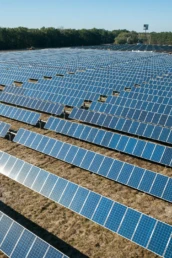
The 225 MW solar park is one of the largest in Bulgaria, comprising nearly 400,000 solar panels and generating around 313 gigawatt hours (GWh) of electricity annually. Built on a 165-hectare brownfield site – the former Silistra airport – the project demonstrates how large-scale renewable energy projects can deliver both environmental and economic value through the repurposing of under-utilised land. It will be operational for at least the next 30 years.
The project also includes a 90 MW / 240 MWh battery energy storage system, supported by a grant under the European Union’s NextGenerationEU programme. The storage system enhances flexibility and supports grid stability by enabling energy generated during peak sunlight hours to be deployed when it is most needed.
Energy TypeSolar
Energy Output225MW
StageOperational
LocationBulgaria
Environmental and Social Impact Assessment Reports
The primary objective of this Environmental and Social Impact Assessment (ESIA) is to evaluate the potential environmental and social impacts, both positive and negative, associated with the planning, construction, and operation of St. George solar park.
This report focuses on assessing the St. George’s environmental and social performance in alignment with the following key requirements:
- IFC International Financing Corporation (IFC) Performance Standards (PS) from 2012, which encompass the IFC Environmental, Health, and Safety Guidelines for Wind Energy (2015), IFC Environmental, Health, and Safety Guidelines for Electric Power Transmission and Distribution (2007), and associated World Bank General Environmental, Health, and Safety (EHS) Guidelines from 2007.
- Bulgarian laws and regulations, EU Law and Regulations pertinent to St. George, including, but not limited to, the EU EIA.
Доклади за оценка на въздействието върху околната и социалната среда
Основната цел на тази оценка на въздействието върху околната и социалната среда (ESIA) е да оцени потенциалните екологични и социални въздействия, както положителни, така и отрицателни, свързани с планирането, изграждането и експлоатацията на фотоволтаичен парк Св. Георги.
Този доклад се фокусира върху оценката на екологичните и социалните резултати на ФеЦ Св. Георги в съответствие със следните ключови изисквания:
- IFC International Financing Corporation (IFC) Performance Standards (PS) от 2012 г., които обхващат Насоките на IFC за околната среда, здравето и безопасността на вятърната енергия (2015 г.), Насоките на IFC за околната среда, здравето и безопасността за пренос и разпределение на електрическа енергия (2007 г.) и свързаните с тях Общи насоки на Световната банка за околната среда, здравето и безопасността (EHS) от 2007 г.
- Български законови и подзаконови актове, Право и подзаконови актове на ЕС, отнасящи се до Св. Георги, включително, но не само, ОВОС на ЕС.
Environmental and Social Impact Assessment
Stakeholder Engagement Plan
Environmental and Social Management Plan
Environmental and Social Action Plan
Област Силистра, България | Rezolv Energy LRP Summary
St. George PV Plant: Livelihood Restoration Plan


The plant will be connected to the main 110 kV transmission grid via two independent connection lines totalling about 6 kilometres in length. The power will be sold to commercial and industrial users through long-term Power Purchase Agreements.
The project will create a large number of new jobs in the construction phase. A significant number of employees will be hired, both for light assembly – which is work suitable for men and women, on both a full-time and part-time basis – and highly-skilled engineering roles. Longer term, the power plant will provide local employment for skilled and semi-skilled labour throughout the 30 plus years of operation.
St. George will be designed, constructed, and operated to the highest environmental, social and governance (ESG) standards.